October 2, 2026
The work around the work is the real bottleneck
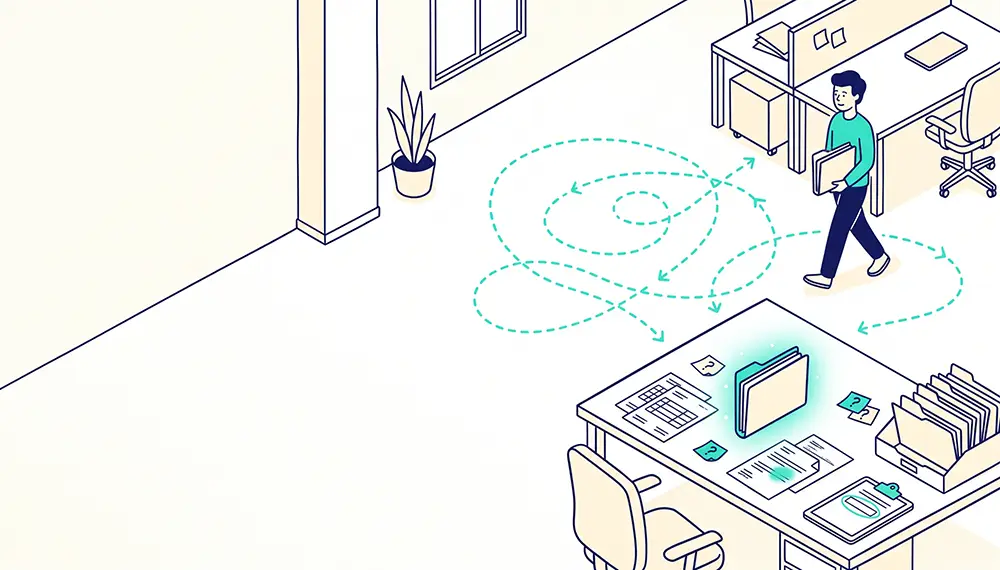
Walk the floor of almost any growing business and you’ll hear the same complaint in different words: we’re busy, but we’re not moving fast enough. It rarely comes from a lack of effort. It comes from how much of the day gets absorbed by work that isn’t really the work.
Answering the same question twice. Re-entering data that already exists somewhere else. Chasing down a detail someone forgot to include. None of it looks like a crisis in the moment. Together, it’s the biggest tax most teams pay without ever putting it on a budget line.
Why this is so easy to miss
Work-around-the-work doesn’t show up on a dashboard. It shows up as a vague sense that the team is stretched, even when headcount and workload look reasonable on paper. A few reasons it stays invisible:
- It’s distributed across dozens of small moments, not one obvious failure.
- Everyone assumes it’s just “how the job is.”
- The people absorbing it are usually too busy doing it to flag it.
Your team isn’t the bottleneck. The system around them is.
That distinction matters. It changes the fix from “hire more people” or “push everyone to move faster” to something more durable: redesigning how information moves.
What a clearer system actually changes
When the handoffs are designed instead of improvised, three things tend to happen at once:
- Information moves on its own. A call, a form, an email — each one lands in the right place without someone manually relaying it.
- People know what comes next. Decisions don’t stall waiting on someone to notice a task is ready.
- Nothing gets missed. Follow-up doesn’t depend on memory or goodwill.
None of this requires replacing your team’s judgment with automation. It requires giving the repetitive, structural parts of the work — the parts that were never a good use of anyone’s expertise — to a system that can carry them reliably.
Where to start
You don’t need to redesign everything at once. Pick the workflow that’s currently costing the most attention — usually something with a lot of handoffs and very little ambiguity — and trace it end to end before changing anything. The fix is almost always smaller than the frustration it’s been causing.
Good automation doesn’t make a business feel less human. It gives people more room to do the work that actually needs them.